Why Every Pair of Jeans Fits Differently — And How to Finally Find Yours
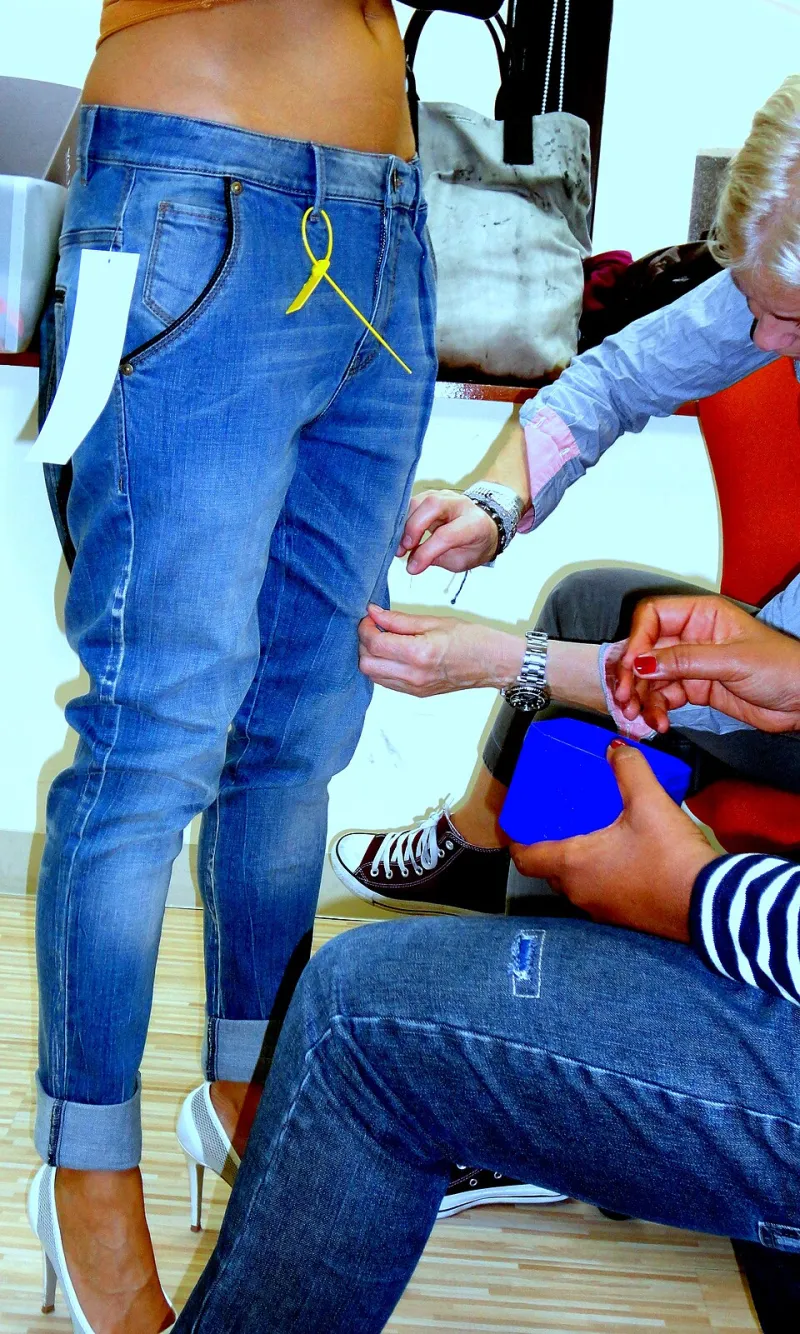
Photo: Fahad Faisal, CC BY-SA 4.0, via Wikimedia Commons
Somewhere in America right now, a person is standing in a fitting room holding two pairs of jeans in the same size, made by the same brand, in the same wash — and they fit completely differently. If you've experienced this, you're not imagining things. You're not "difficult to fit." You're the victim of one of fashion's least discussed open secrets: denim sizing is essentially unregulated fiction.
The Vanity Sizing Problem
Let's start with the number on the tag. Industry researchers have documented that women's clothing sizes have quietly shifted over the decades — what was a size 12 in the 1970s might be labeled an 8 today. Brands do this deliberately. It's called vanity sizing, and it works because a smaller number feels like a compliment, and compliments sell jeans.
The complication: not every brand shifted by the same amount. So the size that flatters you at one label is meaningless at the next. You're not inconsistent — the system is.
Then there's the cut itself. Denim patterns are drafted on a fit model, sometimes a single person. Change the fit model, change the pattern, and suddenly the jeans that fit your friend perfectly bag at the knee on you. Without standardized sizing, every brand is essentially speaking its own language.
A Field Guide to Rises, Cuts, and Fabric
Understanding the vocabulary is half the battle:
Rise is the distance from the crotch seam to the top of the waistband. High-rise sits at or above the natural waist and tends to stay put. Mid-rise is the middle ground. Low-rise, currently circling back into fashion, works best if you've made peace with constant adjustment.
Cut describes the leg. Straight is exactly what it sounds like and flatters nearly everyone. Wide-leg skims from the hip down and pairs beautifully with shorter tops. Bootcut balances the hips. Skinny, despite the think pieces, never actually died — it's just no longer the only option.
Fabric might matter more than any of the above. Look at the fiber content on the tag. 100% cotton denim is rigid at first but molds to your body over months and lasts for decades — this is the stuff of vintage jeans still circulating today. Stretch denim with 1–2% elastane offers comfort from the first wear but tends to bag out faster and lose shape sooner. Anything above 2% stretch and you're basically wearing leggings with a denim print.
The Move Nobody Talks About: Tailoring
Here's the advice that changes everything: buy for the part of your body that's hardest to fit — usually the hips or thighs — and have the rest altered. A waistband taken in at a local tailor typically costs $15 to $25. That's less than the price of a fast-fashion pair that'll fall apart in a year, and it transforms a frustrating near-fit into the best jeans you own.
The gap at the back of the waist, the too-long inseam, the baggy knee — these are all fixable. "It doesn't fit" is often just "it hasn't been to a tailor yet."
Make Them Last Decades
If you find the right pair, protect the investment. Wash rarely — every five to ten wears — in cold water, inside out, and hang dry. Heat is what destroys elastane and fades indigo unevenly. Spot-clean between washes. And never, ever put good denim in the dryer.
Raw denim devotees go further, waiting six months before the first wash to let natural fading patterns — whiskers, honeycombs — develop uniquely to their body. You don't have to go that far, but the principle holds: the best jeans aren't bought, they're broken in.
The Bottom Line
The fitting room struggle was never about your body. It's about an industry with no standards, sizes that shift for marketing reasons, and patterns built on a single fit model. Once you stop internalizing the number on the tag and start evaluating fit, fabric, and construction, jeans shopping stops being a confidence test and becomes what it should be: a search for one good pair, not a judgment of one imperfect person.