Nobody Knows What Business Casual Means Anymore — So Here's How to Dress for Work Anyway
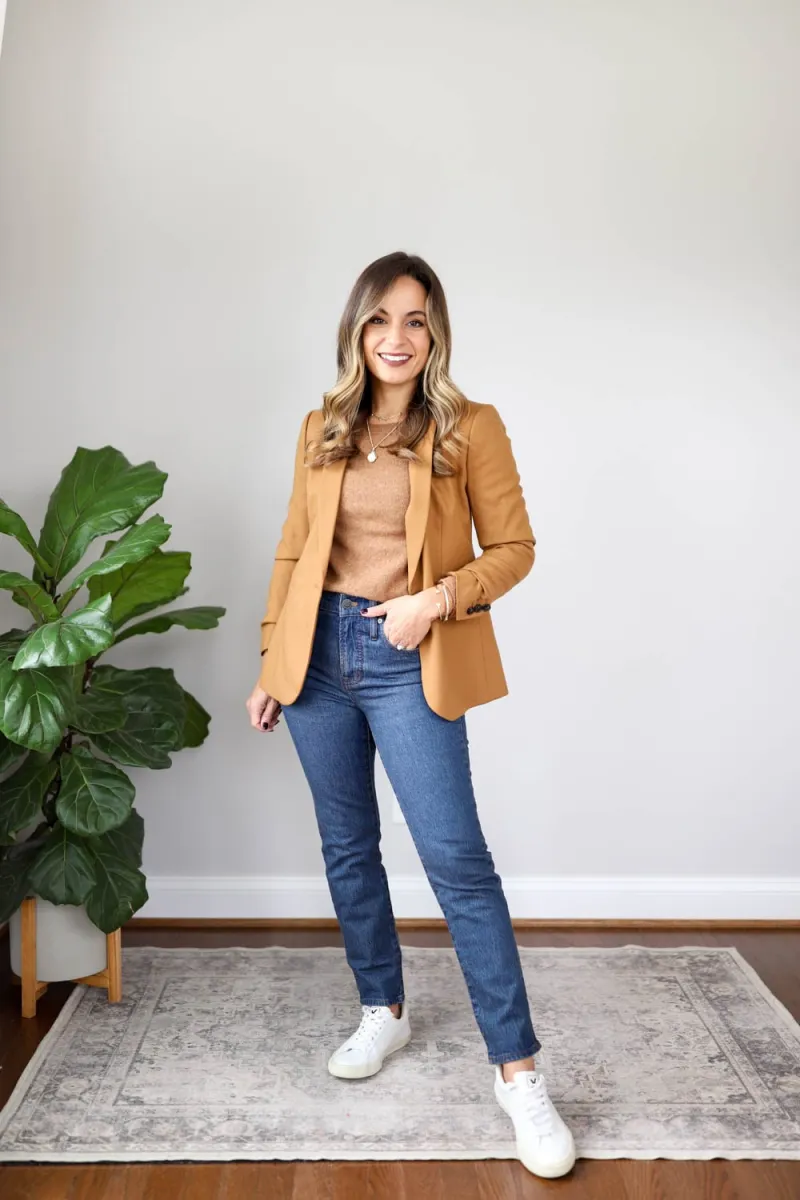
Photo: modern business casual office outfit professional woman blazer sneakers, via pumpsandpushups.com
Somewhere between the pandemic and the return-to-office debates, the American workplace dress code quietly died. Nobody held a funeral. Nobody wrote new rules either. And now we're all standing in front of our closets on Monday morning, wondering whether the blazer is "too much" or the sneakers are "not enough."
The confusion is especially acute for job seekers. What do you wear to an interview at a company where the CEO posts in hoodies? What's "professional" when your interview is over Zoom and only your top half exists?
Here's the honest answer: the old rules are gone, and that's actually an opportunity — if you know how to read the room.
The New Rule: Match the Room, Then Nudge It Up
The single most reliable strategy in today's climate is simple. Figure out what people at the company actually wear, and then dress one notch above that. Not three notches. One.
At a tech startup where everyone's in jeans and hoodies, that means dark jeans, a crisp shirt or knit top, and clean shoes. A full suit would read as a misunderstanding of the culture — like showing up to a potluck with a formal place setting. At a bank or law firm, where the baseline is still closer to traditional, the notch up means a proper suit or a polished dress-and-blazer combination.
The goal isn't to impress with formality anymore. It's to signal that you understand the environment and respect it enough to elevate yourself slightly within it. That's the message hiring managers actually receive.
Industry by Industry: A Quick Decoder
Tech and startups: Elevated casual. Think quality basics — a well-fitting pair of trousers, a structured knit, minimal sneakers. Avoid looking like you tried too hard; avoid looking like you didn't try at all.
Finance, law, consulting: Tradition still rules, but the stranglehold has loosened. Suits remain the safe bet for interviews; once inside, business casual has crept in at many firms. When in doubt, overdress for the interview and calibrate after day one.
Creative fields — design, media, marketing: Your outfit is a portfolio piece. One interesting element — a bold color, a distinctive silhouette, a great pair of shoes — says more than a whole head-to-toe look. But fit still has to be flawless; creativity is not an excuse for sloppiness.
Healthcare, education, nonprofits: Practical polish. Comfortable, put-together, nothing that requires dry cleaning after one wear. These are environments where you'll be moving, and your clothes should agree with that.
The Video Interview Problem
For remote interviews, the camera changes everything. Solid colors read better than busy patterns; mid-tones photograph more reliably than stark white or jet black. Your top half carries the entire presentation, so collar, neckline, and a jacket or structured layer matter more than anything happening below the frame.
One tip worth stealing from broadcasters: check yourself on the actual camera, in the actual lighting, before the actual interview. What looks fine in your mirror can look completely different through a laptop webcam at 2 p.m.
What This Really Means
Underneath all the ambiguity, something genuine has shifted. For decades, workwear was about conformity — proving you belonged by dressing like everyone else. Today, professional dressing is closer to communication. Your clothes answer a question interviewers and colleagues are quietly asking: Do you get it here?
That's why the answer is never a specific garment. It's judgment. The person who walks into a casual office in a tailored blazer over quality denim reads as competent and culturally fluent. The person in the three-piece suit reads as competent but perhaps not fluent. Same formality, different message.
The dress code didn't disappear so much as it moved inside your head. The people who thrive in this new era aren't the ones with the most expensive clothes — they're the ones who've learned to listen to a room and dress in conversation with it.
And honestly? That's a skill worth more than any suit.