You Bought the Fast Fashion. Now What? A Kinder Way to Move Forward

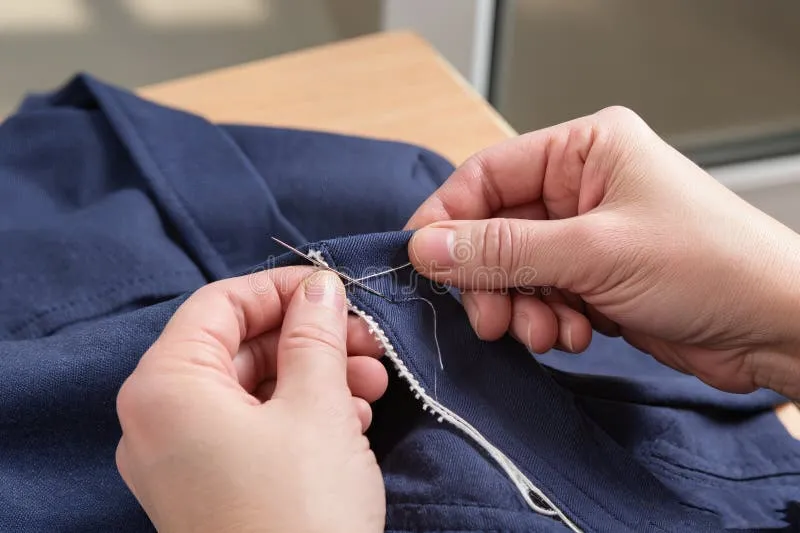
Photo: Shixart1985, CC BY 2.0, via Wikimedia Commons
Let's start with something that doesn't get said enough: you didn't ruin the planet by buying that $15 top from Shein. And the $30 dress you ordered during a pandemic boredom spiral? Also not your personal environmental crime.
That's not to say fast fashion doesn't have real consequences — it does, and they're serious. But the guilt spiral that a lot of American shoppers are caught in right now? It's not helping anyone. Not the planet, not your relationship with clothes, and definitely not your ability to make better choices going forward.
So let's talk about it honestly.
Why Fashion Guilt Hits Different
Clothing is personal in a way that, say, switching to paper straws isn't. The things you wear are tied to identity, memory, emotion, and self-image. When you look at a closet full of impulse buys or trend-chasing pieces that no longer feel like you, it doesn't just feel like a financial mistake. It can feel like evidence of something deeper — like you don't know yourself, or you can't be trusted with your own choices.
That's a heavy thing to carry around.
And for a lot of people — especially those who grew up without much money — fast fashion wasn't just a convenience. It was access. It was the only way to participate in trends, to dress for an interview, to feel like you belonged somewhere. Feeling guilty about that now, from a position of more financial stability or more information, is a complicated emotional knot.
The conversation around sustainable fashion, while important, hasn't always been kind to people who are just figuring this out. There's a certain gatekeeping quality to some of it — a "you should have known better" energy that conveniently ignores the fact that most of us weren't taught to think critically about where our clothes come from.
The Problem With Shame as a Motivator
Here's what the psychology of behavior change actually tells us: shame is a lousy motivator for lasting change. It might produce short-term action — a dramatic closet cleanout, a pledge to never buy fast fashion again — but it tends to collapse under pressure. And when it does, people often overcorrect in the opposite direction, which is how you end up in a guilt-binge-guilt cycle that never actually resolves.
The people who make the most durable shifts in their habits aren't usually the ones who feel the worst about their past behavior. They're the ones who get curious about it instead.
Curiosity sounds like: Why did I buy so much stuff I never wore? Shame sounds like: I'm terrible with money and I have no taste.
One of those questions leads somewhere useful. The other just loops.
Reframing What Those Purchases Actually Mean
Every piece in your closet — even the ones you regret — represents a moment in time. The going-out tops from your early twenties. The maximalist phase you went through in 2019. The athleisure everything you bought in 2020 because, well, 2020.
These aren't failures. They're a record of who you were, what you needed, what you were figuring out. Style is one of the ways we try on different versions of ourselves before we know which one fits. That process is supposed to be a little messy.
The goal isn't to have always had perfect taste. The goal is to understand yourself well enough now to make choices that stick.
Practical Ways to Actually Move Forward
Once you've given yourself a little grace — and this part matters, so don't skip it — here are some concrete ways to shift your relationship with shopping without swinging into rigid all-or-nothing thinking.
Audit your triggers, not just your closet. What usually prompts a fast fashion purchase for you? Stress? Boredom? Seeing something on social media? Knowing your pattern is more useful than any rule you could set for yourself.
Stop cold-turkey pledges. "I will never buy fast fashion again" is the kind of promise that sets you up to feel terrible the next time you grab something affordable because you need it. Instead, try a more honest commitment: I want to be more intentional about what I bring in. That's something you can actually keep.
Use what you have first. Before any new purchase, check whether something in your existing wardrobe could do the job. Not because buying new is bad, but because this habit builds trust with your own judgment. You start to notice when you actually need something versus when you're just in a shopping mood.
Let go without drama. If you're clearing out fast fashion pieces, you don't owe them guilt. Donate, sell, or pass them on — and move forward. Holding onto things out of obligation doesn't help the environment; it just clutters your space and keeps you emotionally attached to a version of yourself you're trying to grow past.
Invest in one thing at a time. You don't have to overhaul your entire wardrobe to feel like you're making progress. Replacing one worn-out piece with something better-made is a real step. It doesn't have to be dramatic to count.
What Intentional Dressing Actually Looks Like
Here's the thing about the "intentional fashion" world that sometimes gets lost in translation: it's not about spending more money or owning fewer things or following a specific set of rules. It's about paying attention.
Paying attention to what you actually wear. To what makes you feel like yourself. To what lasts and what doesn't. To the difference between wanting something because you love it and wanting it because an algorithm figured out how to make you feel like you're missing out.
At Lucia, that's the kind of dressing we're interested in — not perfect, not guilt-ridden, just more aware. The past purchases that didn't work out? They're tuition. You learned something from every single one of them, even if it took a while to figure out what.
You don't have to earn your way back from a shopping history you're not proud of. You just have to start paying attention now. That's enough.