The Case for Keeping: Why Fixing Your Clothes Is the Smartest Fashion Move You'll Make
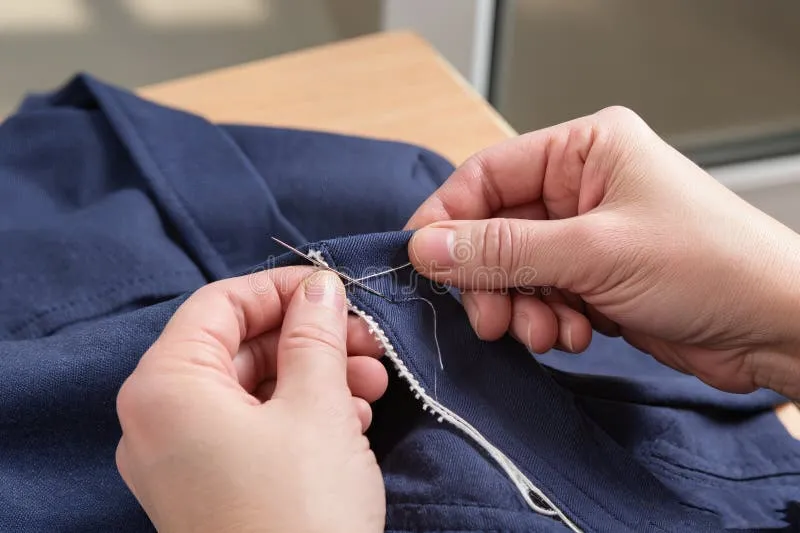
Photo: close up hands sewing button on quality fabric clothing repair at home, via thumbs.dreamstime.com
Let's be honest: most of us have thrown away a piece of clothing for a reason that, in hindsight, was completely fixable. A zipper that stuck. A hem that unraveled. A seam that gave out after one too many washes. In the moment, it felt easier to just replace it. But here's the thing — that impulse is costing us more than we realize.
The average American throws away about 81 pounds of clothing per year. A lot of that waste isn't from worn-out, truly done pieces. It's from items that needed about ten minutes and a needle and thread. At Lucia, we're firm believers that quality basics deserve more than a single season. Here's a practical, no-judgment guide to making your wardrobe work harder — and last longer.
The Real Math Behind Cost-Per-Wear
Before we get into repairs, let's talk numbers — because they're pretty eye-opening.
Say you buy a well-made cotton button-down for $90. If you wear it 10 times and toss it, that's $9 per wear. But if you keep it for three years, wearing it twice a week on average? You're looking at something like $0.29 per wear. That's not a typo.
Now compare that to a $25 shirt that pills after five washes and gets donated after two months. The cheap option ends up being the expensive one.
This is the core argument for investing in quality basics — and for repairing them when something goes wrong. A $15 tailoring job on a $120 pair of trousers that extends their life by two years isn't an expense. It's a return on investment.
What's Actually Worth Repairing?
Not everything needs professional intervention. Here's a quick breakdown of common repair scenarios and what to do with each:
Loose or Missing Buttons
DIY it. This is the easiest fix in the book and takes about five minutes. Keep a small sewing kit at home (they're cheap and endlessly useful), and reattach buttons before they fall off entirely. Lucia tip: buy a few extra buttons when you purchase a new piece — most quality garments include spares in the lining or packaging.
Unraveling Hems
DIY or tailor, depending on the fabric. A simple hem on denim or cotton? Totally manageable at home with iron-on hem tape or a basic stitch. Wool trousers or a structured blazer? Take it to a tailor. The investment is usually $10–$20 and makes the piece look brand new.
Broken Zippers
Go professional. Zipper replacement is one of the most underrated tailoring services out there. A good tailor can swap a zipper on a jacket or dress for $15–$40, depending on the complexity. Compare that to replacing the whole garment. Easy call.
Pilling on Sweaters and Knits
DIY with a fabric shaver. A $10–$15 fabric shaver (also called a lint shaver or defuzzer) can make a pilled sweater look almost new. Use it gently, in small circular motions, and you'll be amazed. This is one of those tools that pays for itself the first time you use it.
Worn Elbows or Knees
Patch or repurpose. Leather elbow patches on a blazer or sweater aren't just a fix — they're a style statement. Denim knee patches on jeans have a whole history rooted in American workwear. Lean into it.
Fading and Discoloration
Dye it. Fabric dye is widely available and surprisingly forgiving. A faded black dress can be revived with a dye bath. A stained white shirt can become intentionally off-white or even a soft pastel. This one takes a bit more effort, but the result is essentially a new piece.
Real Lucia Customers, Real Longevity Stories
We asked a few of our community members to share the pieces they've kept alive through repairs — and the stories are genuinely impressive.
Priya, 38, from Seattle: "I have a Lucia wrap dress I've owned for four years. The tie broke in year two, and instead of replacing it, I had a tailor add a new one in a coordinating fabric. Now it looks intentional and I love it even more than the original."
Tom, 52, from Philadelphia: "My go-to chinos had a seam blow out at the worst possible moment — meeting with a client. I got them repaired that afternoon for $12. Those pants are still in my weekly rotation. I've probably worn them 200 times by now."
Keisha, 29, from Atlanta: "I bought a cashmere blend sweater that started pilling after the first winter. I almost donated it. Then I tried a fabric shaver and it looked incredible. I've been wearing it for three seasons since."
Building a Repair-Ready Wardrobe
If you want to make repair a habit rather than a last resort, a little preparation goes a long way. Here's what to keep on hand:
- A basic sewing kit — needles, thread in neutral colors, small scissors
- A fabric shaver — for knits and anything prone to pilling
- Iron-on hem tape — for quick fixes on casual pieces
- Fabric dye — for faded or stained items you're not ready to let go of
- A go-to tailor — find one in your area and build a relationship. Good tailors are worth their weight in gold.
Also worth knowing: many dry cleaners offer basic repair services alongside cleaning. If you're already dropping something off, ask what they can fix while they're at it.
The Bigger Picture
Repairing your clothes is, at its core, a form of respect — for the craftsmanship that went into making something well, for the money you spent on it, and for the resources it took to produce it. It's also, frankly, a quiet act of rebellion against a culture that constantly tells us newer is better.
At Lucia, we put real thought into the construction of our pieces because we want them to be with you for the long haul. But even the best-made clothes need a little care over time. Think of it less like maintenance and more like a relationship — you put in some effort, and it keeps showing up for you.
The piece you repair today might just become the one you look back on in ten years and think: I'm so glad I kept that.