From Chaos to Clarity: How One Woman Rewired Her Mornings by Rethinking Her Wardrobe
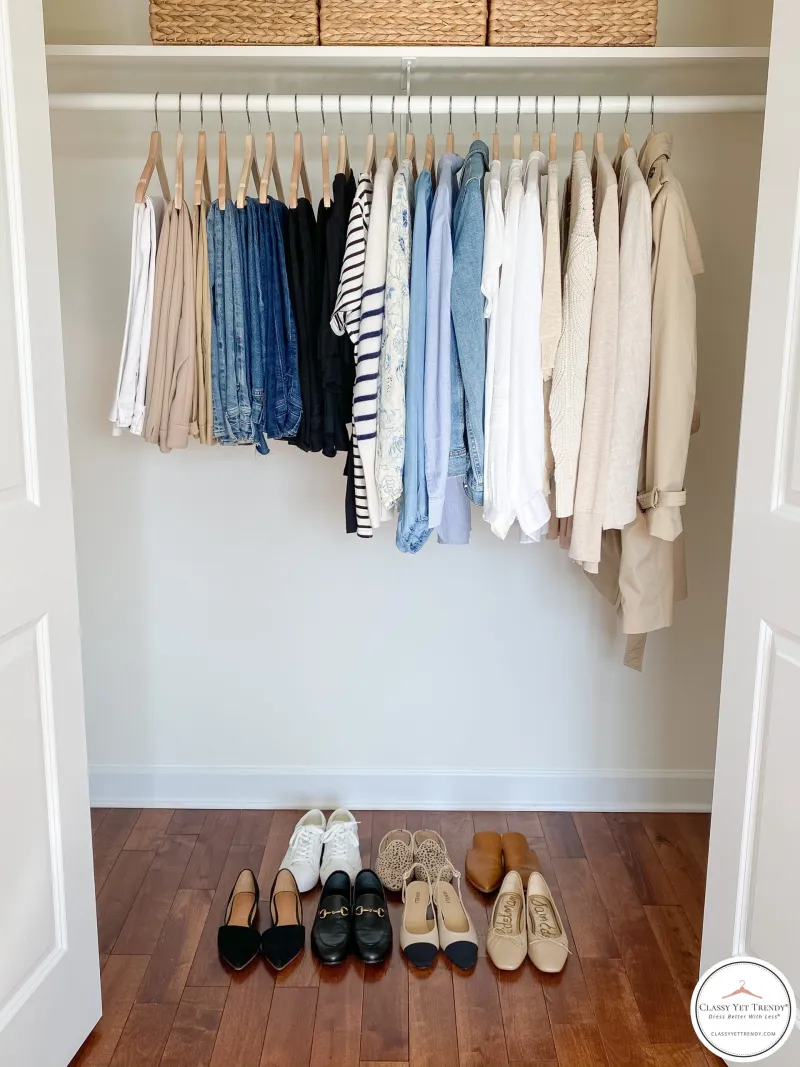
Photo: woman organizing stylish capsule wardrobe in modern closet, via classyyettrendy.com
Maya used to set her alarm 20 minutes earlier than she needed to. Not to work out. Not to meditate. Just to stand in front of her closet and stare.
"I had so many clothes," she told us. "But every single morning felt like a crisis. I'd pull things out, nothing would feel right, and I'd end up wearing the same three outfits on rotation while everything else just hung there collecting dust."
She's not alone. Decision fatigue is real, and for a lot of women, the closet is where it starts — before the workday even begins. But Maya's story doesn't end with the overwhelm. It ends with something a lot more interesting: a wardrobe that actually works, and a version of herself she didn't know she was missing.
The Breaking Point That Started Everything
The shift happened on a Tuesday in February. Maya had a big presentation at work — the kind that required showing up feeling sharp. She spent 40 minutes trying on combinations, rejected everything, and ultimately grabbed a blazer she didn't even like because it was the only thing that felt "safe."
"I walked into that meeting feeling like I was wearing a costume," she said. "Not my costume. Someone else's. And I think it showed."
That night, she decided something had to change. Not her body, not her budget — her approach.
She started where most of us probably should: she pulled absolutely everything out of her closet and laid it on the bed. All of it. It took up most of her bedroom floor. And then she sat with it.
The Question That Changed the Game
Instead of asking "Does this spark joy?" — a phrase that's become almost meaningless from overuse — Maya asked herself something more practical: Does this make me feel like myself?
It sounds simple, but it cuts differently. Joy is abstract. Feeling like yourself is specific. You know it when you feel it, and you definitely know when you don't.
Anything that made her hesitate went into a donate pile. Not because it was ugly or unfashionable, but because hesitation itself is the signal. If you have to talk yourself into wearing something, it's already lost.
What she kept surprised her. It wasn't her most expensive pieces or her trendiest finds. It was a small collection of things that she reached for instinctively — a well-fitted pair of straight-leg trousers, a few quality tops that layered easily, one really good leather belt, and a handful of dresses she'd worn on days that felt good.
"I kept maybe 30 percent of what I owned," she said. "And I felt lighter immediately. Like, physically lighter."
Building Back Intentionally
Once the closet was cleared, Maya didn't rush to refill it. That's the part most people skip — the pause. Instead, she spent a couple of weeks wearing only what she'd kept and noting the gaps. What was she reaching for that wasn't there? What kinds of occasions felt unaddressed?
That's when she started shopping with a list instead of a mood. She needed a versatile jacket that could go from the office to a dinner. She wanted a pair of shoes that could handle Chicago winters without looking like she'd given up. She was looking for a top that photographed well for video calls but didn't feel stiff in person.
Every purchase had a job. And that changed everything about how she shopped.
"I stopped buying things because they were on sale or because I liked them in the store," she said. "I started asking: where does this actually live in my life? What does it replace or complete?"
She also started paying more attention to fit — not just whether something was her size, but whether it was her fit. She learned she does better in slightly relaxed silhouettes at the hip and more structure at the shoulder. Once she knew that, shopping got faster and returns got fewer.
The Ripple Effect Nobody Talks About
Here's the part of Maya's story that surprised even her: the clarity in her closet started showing up everywhere else.
She stopped second-guessing herself in meetings. She made decisions at work faster. She felt more comfortable in social situations. She attributed a lot of it to the simple fact that she was no longer starting every day with a small defeat.
"When you feel put together in the morning, it's like you've already won something before 9 a.m.," she said. "That energy carries."
Psychologists have a term for this: enclothed cognition. The idea is that what we wear influences not just how others perceive us, but how we perceive ourselves — and how we perform. When your clothes align with your self-image, you show up differently. It's not vanity. It's psychology.
Maya didn't need a bigger closet or a bigger budget. She needed a more intentional relationship with what she already had.
What You Can Take From Her Story
You don't have to overhaul everything in a weekend. But a few of Maya's moves are worth borrowing:
Start with a real audit. Not a mental one — a physical one. Pull things out. Look at them. Notice what you reach for and what you avoid.
Ask the right question. "Does this make me feel like myself?" is more useful than almost any other filter. It bypasses trends, bypasses guilt about money spent, and gets straight to the point.
Shop with a list, not a vibe. Knowing what you actually need before you browse makes every purchase more purposeful — and usually more satisfying long-term.
Give yourself the pause. After editing down, live with what's left before you start adding. You'll find out quickly what's actually missing versus what you just think you want.
Invest in fit. One piece that fits perfectly will get worn more than five that are almost right. Almost right is the enemy of getting dressed with confidence.
The Closet as a Mirror
What Maya's journey really illustrates is that the closet isn't just a storage space — it's a reflection of how you see yourself and how much you trust your own instincts. A chaotic, overstuffed wardrobe often signals something deeper: a tendency to hold on just in case, to buy reactively, to let external noise drown out your own sense of style.
Curating it isn't about minimalism for its own sake. It's about making room — literal and mental — for the version of yourself you're actually trying to be.
At Lucia, we believe that's exactly what fashion is for. Not to perform for other people. Not to follow whatever's trending this season. But to make getting dressed feel like an act of self-expression rather than a source of stress.
Maya still sets her alarm early. But now it's for the meditation.