What's Actually in Your Closet? A 30-Minute Wardrobe Reset That Changes How You Shop
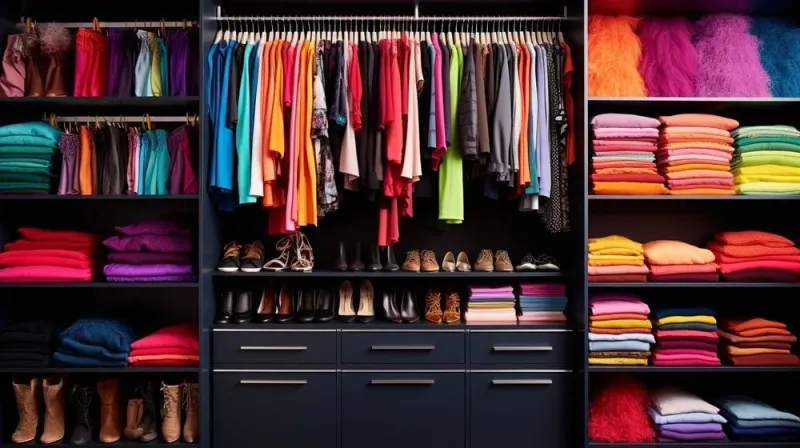
Photo: woman organizing colorful clothes in open wardrobe closet, via images.suite101.com
Here's a scenario that probably sounds familiar: you're standing in front of a packed closet, convinced you have nothing to wear. There are clothes everywhere — on hangers, folded on shelves, maybe piled on that one chair — and yet nothing feels right. So you open your phone, scroll through a few product pages, and add something new to the cart.
But what if the problem isn't what you don't have? What if it's that you've lost track of what you do have?
That's exactly what the Lucia Closet Audit is designed to fix. This isn't a purge session or a minimalism exercise. It's a 30-minute system to help you actually see your wardrobe — maybe for the first time in a while — and walk away knowing exactly where you stand.
Why Most Wardrobe Cleanouts Miss the Point
The typical advice goes something like this: pull everything out, hold each item, ask if it sparks joy, donate the rest. And look, that approach has helped a lot of people. But it skips a crucial step — understanding why certain pieces aren't working before you get rid of them.
Maybe that blazer you never wear just needs a different pairing. Maybe those jeans feel off because you've been wearing them with the wrong shoes. Before you toss something into the donation pile, it's worth asking whether you've actually given it a fair shot.
The Lucia Closet Audit focuses on inventory and insight, not just elimination. The goal is to walk away with a clearer picture of your style, not just a lighter closet.
What You'll Need
Keep it simple. Grab your phone (for photos), a notebook or the notes app, and set a timer for 30 minutes. That's it. No color-coded tags, no spreadsheets — unless you're into that, in which case, go for it.
Step 1: Divide by Category (8 Minutes)
Start by grouping everything into broad categories: tops, bottoms, dresses/jumpsuits, outerwear, shoes, and accessories. Don't overthink subcategories at this stage — just get things sorted so you can see the full picture of each type.
As you do this, you'll probably notice something right away. Maybe you have fourteen casual tops and only two that could work in a professional setting. Maybe you own six pairs of jeans but only one pair of trousers. That imbalance is data, and it matters.
Jot down what feels heavy and what feels sparse. You're not judging yourself — you're just taking stock.
Step 2: The Honest Wear Test (10 Minutes)
Now go through each category and mentally sort items into three groups:
- Regulars — things you reach for naturally and feel good in
- Occasionals — pieces you wear sometimes but not instinctively
- Strangers — items you honestly can't remember wearing in the last year
For your Strangers pile, don't immediately write them off. Instead, ask: Why haven't I worn this? The answers are more useful than you'd think. Maybe it's a fit issue that a tailor could fix in ten minutes. Maybe it's a color you love in theory but struggle to style. Maybe it just needs the right partner piece.
Take a quick photo of each Stranger. You'll use those later.
Step 3: The Combination Experiment (7 Minutes)
This is the part most people skip, and it's honestly the most fun. Take three pieces from your Occasionals or Strangers pile and try pairing them with things you already wear on repeat.
That silky blouse you bought for a wedding two years ago? Try it tucked into your everyday jeans with white sneakers. The oversized cardigan that felt too casual? Layer it over a slip dress with ankle boots. You're not trying to create a Pinterest board — you're testing whether these pieces have more range than you gave them credit for.
Snap photos of combinations that work. These become your style reference when you're getting dressed in a hurry.
Step 4: Identify the Real Gaps (5 Minutes)
Now that you've seen what you have and what it can actually do, look at your notes. Where are the genuine holes?
Not "I don't have the exact olive utility jacket I saw on Instagram." Real gaps look more like: I have no versatile layer for transitional weather or I own nothing I can wear to a dinner that's slightly more elevated than casual.
Write these down specifically. Vague gaps lead to vague purchases that don't solve anything. Specific gaps lead to intentional shopping — the kind where you actually use what you buy.
Step 5: The Keep, Fix, Release List (5 Minutes)
With everything fresh in your mind, create three short lists:
- Keep — pieces you're confident about
- Fix — items worth altering, repairing, or restyling
- Release — things that genuinely don't serve you and probably won't
For your Release pile, consider donating to local clothing drives, selling through platforms like ThredUp or Poshmark, or passing things on to friends before defaulting to the trash. Even fast fashion pieces can have a second life somewhere.
What to Do With What You Learned
Your audit is done. Now you've got something most people don't have when they open a shopping app: actual context.
You know what you wear consistently, what's been overlooked, what could work better with the right pairing, and where the real gaps are. That's a completely different starting point than scrolling through new arrivals hoping something feels right.
At Lucia, we believe the best wardrobe isn't the biggest one — it's the one you actually understand. When you know what you have, every new piece you bring in has a purpose. And that's when style stops feeling like a problem to solve and starts feeling like something that's genuinely yours.
So before you shop the new arrivals, spend 30 minutes with what's already there. You might surprise yourself.