Stop Shopping, Start Seeing: The Case for Falling Back in Love With What You Own
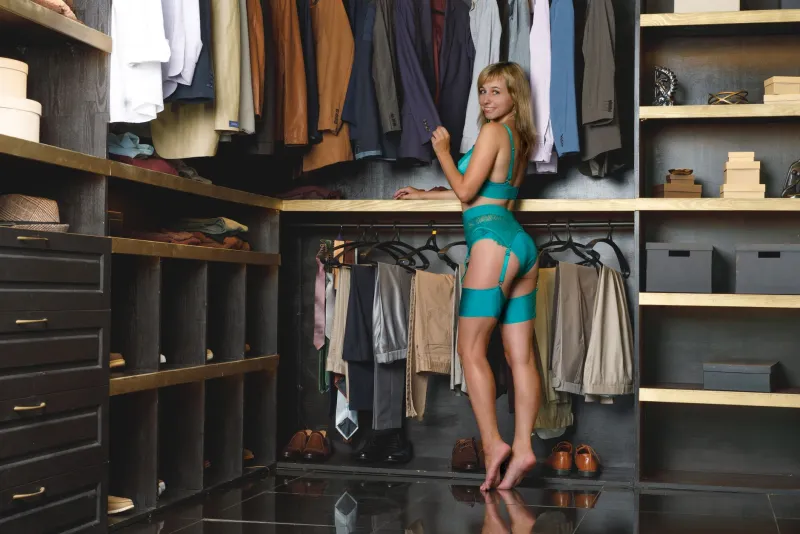
There's a particular kind of frustration that hits when you're standing in front of a full closet thinking you have absolutely nothing to wear. It's almost funny — except it doesn't feel funny in the moment. You've spent real money, real time, and real energy filling that space, and somehow it still feels like it's failing you.
Here's a thought worth sitting with: what if the problem isn't your closet? What if it's the way you've been looking at it?
At Lucia, we believe that style isn't really about accumulation. It's about recognition — learning to see the value in what's already yours and working it in ways that feel genuinely good. That's what we call the Lucia Principle: your best outfits, more often than not, already exist. They're just waiting to be rediscovered.
Why We're Wired to Overlook What We Have
There's actual psychology behind the "nothing to wear" feeling, and it has less to do with your wardrobe and more to do with how the brain processes familiarity. Psychologists call it hedonic adaptation — basically, we stop noticing things once they become routine. The blazer you loved when you bought it? Your brain has filed it under "normal" and moved on. It's not that it stopped being great. It just stopped feeling new.
And the fashion industry — bless its relentless heart — is very good at exploiting that tendency. New arrivals, seasonal drops, trend cycles that spin faster every year. The message is constant: what you have isn't enough. What's coming next is what you really need.
But people who genuinely have great style? They tend to ignore that noise. They wear the same leather jacket on repeat. They reach for the same pair of well-cut trousers every week. They've figured out something the rest of us are still learning: repetition isn't a style failure. It's a style signature.
The Confidence Loop That Comes From Familiar Pieces
Think about the outfits that have made you feel the most like yourself — not the most Instagram-worthy, not the most on-trend, but the most you. Chances are, they weren't brand new. They were pieces you'd worn before, combinations you'd already tested, looks you could put together without overthinking.
That's not a coincidence. Confidence in clothing comes from familiarity. When you know how something fits, how it moves, how it layers, you stop second-guessing yourself and start just wearing it. That ease reads as style. It's why the woman who wears the same great coat all winter looks more pulled-together than the one who's always chasing something different.
Reaching for your favorites isn't a lack of creativity. It's your instincts telling you what actually works for your life, your body, and your personality. That's worth trusting.
How to See Your Closet Like You're Meeting It for the First Time
The goal isn't to pretend your closet is something it isn't. It's to genuinely look at it differently. Here are a few approaches that actually work:
Do a reverse hang. Turn every hanger backward at the start of the month. As you wear things, flip the hanger back the right way. After a few weeks, you'll have a clear visual map of what you actually reach for — and what's just taking up space. The pieces you wear most? Those are your anchors. Build around them intentionally.
Pull everything out and edit by feel. Not by trend, not by what you paid, not by what you think you should keep. Hold each piece and ask: does this feel like me right now? If the answer is a clear yes, it stays. If it's a hesitant maybe or a definite no, it's time to let it go — or at least move it to a separate section so it's not cluttering your decision-making every morning.
Photograph your outfits for two weeks. You don't have to post them anywhere. Just take a quick mirror shot before you leave the house. At the end of two weeks, you'll have a visual record of what you're actually wearing and what combinations you're naturally gravitating toward. It's surprisingly clarifying — and often reveals that you have more range than you thought.
Small Tweaks That Make Old Favorites Feel New
Falling back in love with what you own doesn't mean wearing everything exactly as you always have. Sometimes a tiny shift in how you style something is all it takes to make it feel fresh again.
Try tucking in a top you've always worn loose. Swap your usual belt for a different texture or width. Layer a piece you've always worn solo — a slip dress over a fitted tee, a button-down left open over a graphic tee. Roll your sleeves a different way. Wear something you've always treated as a bottom layer on its own.
These aren't revolutionary moves. But they work, because they force your brain to stop categorizing familiar pieces as background noise and start seeing them as actual options again. The piece didn't change. Your relationship to it did.
What This Actually Saves You (Beyond Money)
The obvious benefit of working with what you have is financial — you're not constantly spending to keep up with a trend cycle that never slows down. But the less obvious savings might matter even more.
You save mental energy. Decision fatigue is real, and a wardrobe full of pieces you genuinely trust is a wardrobe that makes mornings easier. You save emotional bandwidth. The low-grade anxiety of feeling like your style is always behind or always lacking is exhausting in a way that's easy to underestimate until it stops. And you save something harder to quantify — the quiet satisfaction of knowing yourself well enough to work with what you have.
That's the Lucia Principle in practice. Not minimalism for minimalism's sake. Not a shopping ban or a capsule wardrobe manifesto. Just the genuine belief that style mastery isn't about having more options. It's about understanding the ones you already have.
Your Closet Is Already Trying to Tell You Something
Every time you reach for the same piece on autopilot, your wardrobe is giving you information. Every time you skip something without quite knowing why, that's information too. The clothes you own have already sorted themselves, in a way — into what works for your life and what doesn't.
The only question is whether you're paying attention.
Start there. Not with a shopping cart, not with a new trend, not with a complete overhaul. Just with a willingness to really look at what's already hanging in front of you. You might be surprised by what you find.